
What Is an ASN and Why Do Network Operators Use One?
An ASN identifies a routing domain that exchanges routes with other networks. Understand its role, responsibilities and when it is relevant.
Read article →
Article library
An ASN identifies a routing domain that exchanges routes with other networks. Understand its role, responsibilities and when it is relevant.
Read article →
BGP helps networks exchange reachability information across the internet. Learn when it matters to business connectivity and resilience.
Read article →
A second circuit only improves resilience when its route, carrier, capacity, failover and recovery behaviour have been properly designed and tested.
Read article →
Download speed gets attention, but business applications also depend on upload capacity. Learn when symmetrical bandwidth makes a practical difference.
Read article →
A practical stage-by-stage explanation of leased-line surveys, wayleaves, carrier work, site preparation, testing and service handover.
Read article →
EoFTTC and EoFTTP use different access paths to deliver managed Ethernet services. Learn what to validate at each business site.
Read article →
Business and home broadband may use similar access networks, but support, addressing, resilience and operational accountability can differ.
Read article →
Understand how FTTP, FTTC and SoGEA connect UK business sites and what their access technology means for speed, voice and migration.
Read article →
Estimate practical business broadband requirements from applications, users and peak upload demand rather than relying on one speed-per-person rule.
Read article →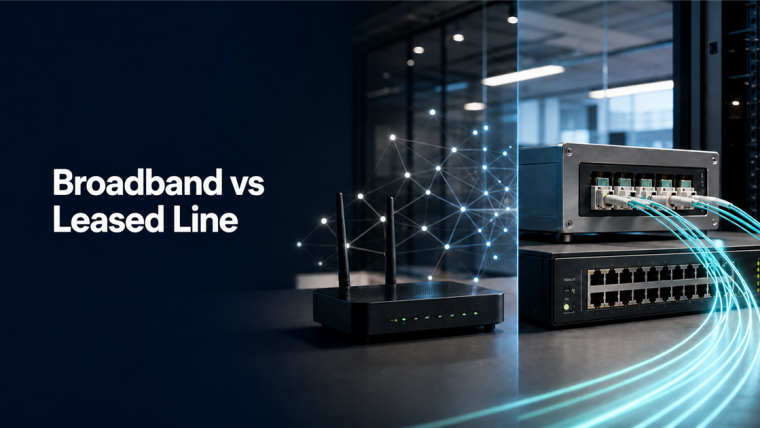
Compare business broadband and leased lines, including contention, symmetrical speeds, resilience, SLAs, VoIP suitability and costs for UK businesses.
Read article →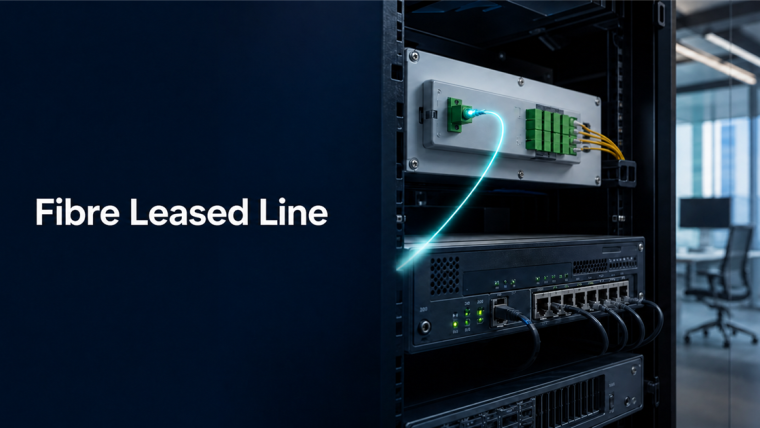
Learn how fibre leased lines work, including dedicated connectivity, symmetrical speeds, SLAs, resilience, installation and when they are worthwhile.
Read article →