What Is the 3CX AI Customer Service Agent?
A practical look at the new 3CX AI Customer Service Agent, what it can handle, where human support still matters and how businesses should prepare.
Release status: As at 2 September 2026, 3CX V20 Update 10 is an Alpha release intended for testing and evaluation only. It should not be installed on a production phone system.
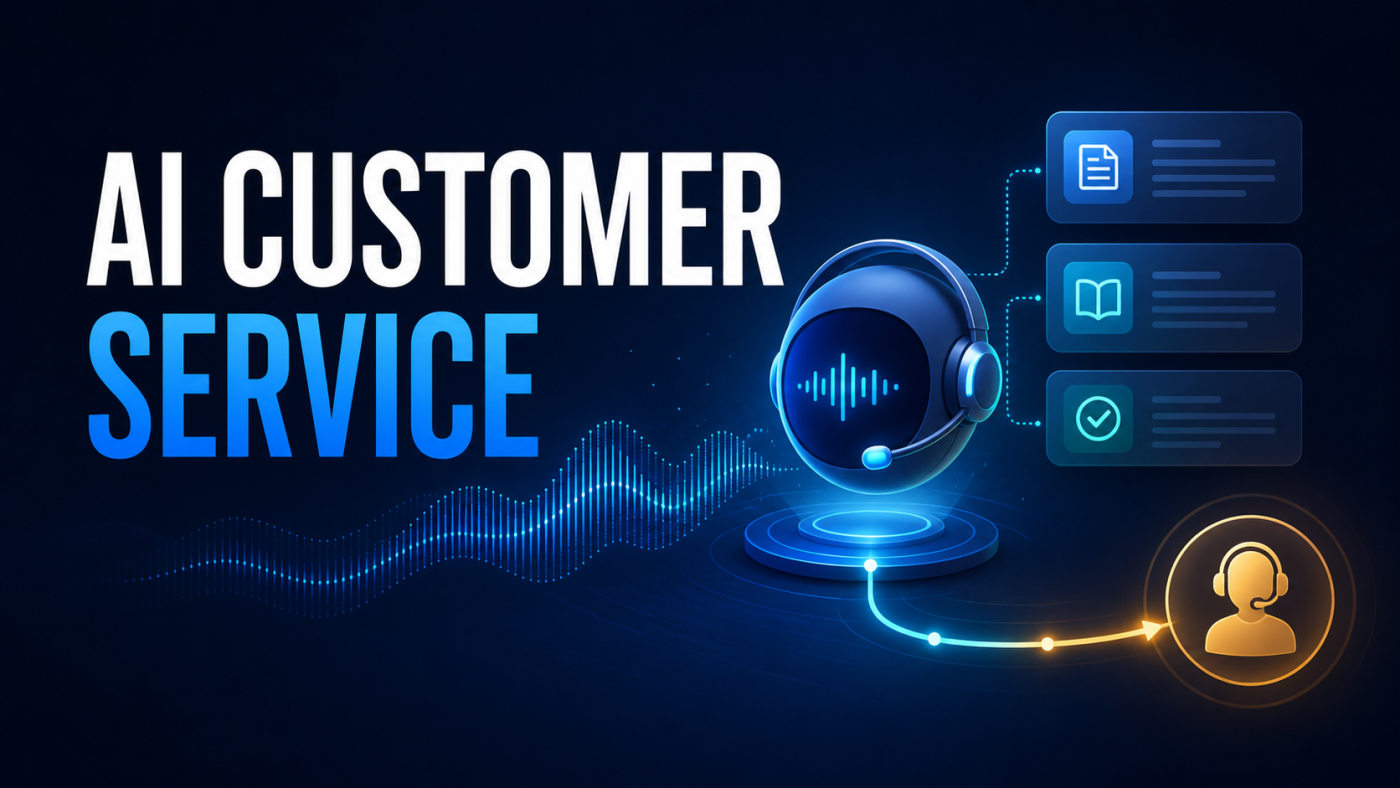
3CX has introduced a new AI Customer Service Agent designed to answer routine support questions before deciding whether a caller needs a human. It is a different role from the existing AI Receptionist: the receptionist mainly understands why somebody is calling and routes them, while the Customer Service Agent can search approved business information and try to resolve straightforward enquiries.
The feature is part of 3CX V20 Update 10 and requires the 3CX AI Edition. 3CX explains the new capability in its official AI Customer Service Agent announcement.
What can the AI Customer Service Agent handle?
The intended use is level 0 and level 1 support: common questions whose answers already exist in FAQs, policies, product guides or troubleshooting documents. A caller might ask about opening hours, a standard process, a known setup step or what information is needed before a support case can progress.
- Listen to the caller’s question in natural language.
- Search the knowledge sources assigned by an administrator.
- Give an answer based on that approved material.
- Transfer unresolved or more complex requests to a human destination.
This can reduce repetitive work, but it is not a reason to remove escalation routes. A useful deployment gives callers a clear way to reach a person when confidence is low, the request falls outside the knowledge base or the conversation involves judgement.
The knowledge base is the foundation
The agent can only work with the information it has been given. Out-of-date procedures, overlapping documents or ambiguous policies will lead to weak answers. Start with a small, well-owned set of common questions and keep each source focused on one subject. Our guide to building a 3CX AI knowledge base explains how structured Markdown can improve retrieval.
Where it could help a UK business
Good candidates include service desks with recurring first-line questions, organisations that receive predictable “how do I” calls, and teams that want to offer a consistent first response outside normal hours. The benefit should be measured in correctly resolved enquiries and clean handovers, not simply the number of calls answered by AI.
A sensible rollout checklist
- Wait for an appropriate production release before deploying on a live PBX.
- Choose one narrow enquiry type and define what success looks like.
- Review the source material and assign an owner to keep it current.
- Define the human fallback destination and out-of-hours behaviour.
- Test normal, unclear and deliberately difficult questions.
- Review real outcomes before widening the scope.
Businesses evaluating AI call handling can read more about our 3CX AI services. We can help assess the use case, prepare the call flow and plan a controlled deployment once the required 3CX release is suitable for production.