3CX AI Knowledge Base: How to Improve Agent Answers
A practical guide to preparing focused, structured and maintainable knowledge sources for a 3CX AI Agent.
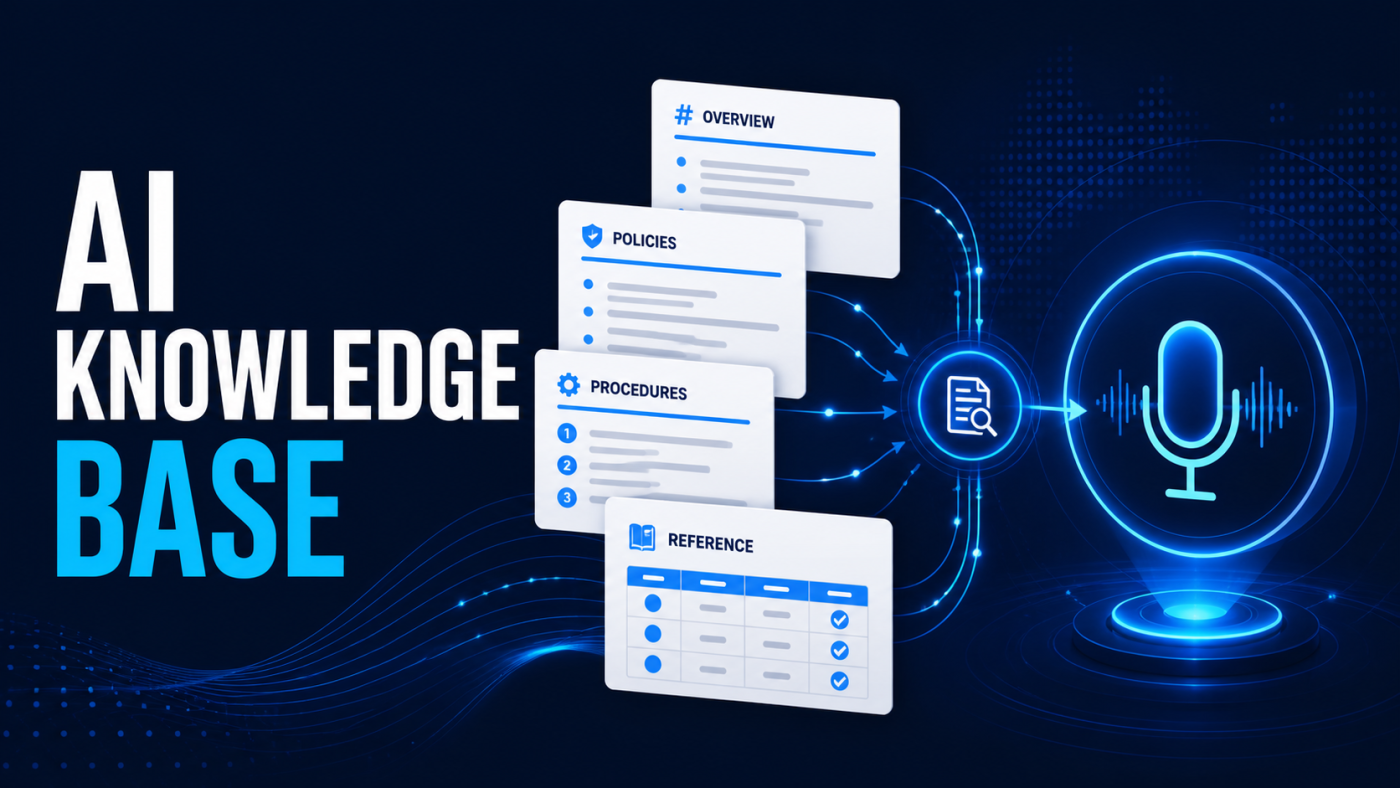
An AI voice agent is only as useful as the information it can reliably retrieve. Uploading a collection of polished brochures, complex spreadsheets and long policy documents may feel comprehensive, but the layout and mixed subject matter can make the right answer harder to find.
3CX recommends clean Markdown files for AI Agent knowledge sources in its guide to improving AI Agent answers with Markdown. Markdown is simple text with explicit headings, lists and tables, giving both people and retrieval systems a clearer structure.
Why document structure affects the answer
Documents designed mainly for print can contain multi-column layouts, decorative elements, headers and tables that lose their meaning when extracted. A heading may become separated from its paragraph, or a table cell may be read without the row label that gives it context. Clear structure reduces that ambiguity.
- Use one clear subject for each file.
- Keep heading levels in a logical order.
- Write direct answers before adding background detail.
- Use lists for steps and conditions.
- Keep tables small and give every column a descriptive heading.
- Add an owner and last-reviewed date.
Split by topic, not by arbitrary file size
A single “everything we know” document forces the agent to search through unrelated material. Separate sources for opening hours, delivery policy, supported products and first-line troubleshooting make selection more precise. Avoid copying the same rule into several files, because conflicting versions make it difficult to know which answer is authoritative.
Do not use a static knowledge base for live data
Frequently changing information such as stock, account balances or live service status should come from an appropriate controlled integration, not a document that may be out of date minutes after upload. Knowledge sources are better suited to approved policies, procedureshooting guidance, product explanations and stable processes.
A practical content workflow
- Choose the most frequent, low-risk questions.
- Confirm the approved answer with the process owner.
- Put each topic in a concise Markdown file.
- Add context such as audience, product and review date.
- Test natural, incomplete and ambiguous questions.
- Check that the agent declines or hands over when the source is insufficient.
- Review content whenever the underlying policy changes.
Conversion tools can provide a starting point for existing Word, PDF or spreadsheet material, but the result still needs human review. Check reading order, tables, duplicated headers and any statement that could cause financial, contractual or service impact.
Treat knowledge as an owned service
Successful AI Agent projects assign responsibility for both the call experience and the information behind it. Track unanswered questions, incorrect retrievals and human handovers, then improve the source rather than making the prompt longer and more complicated.
Our 3CX AI services can help you scope the call-handling objective, prepare knowledge sources and test the complete caller journey.